*All Client stories have been modified to keep their identity anonymous. Furthermore, I have received written consent form the client to use their stories/sessions for educational purposes; they have been more than delighted to help others through their personal work.
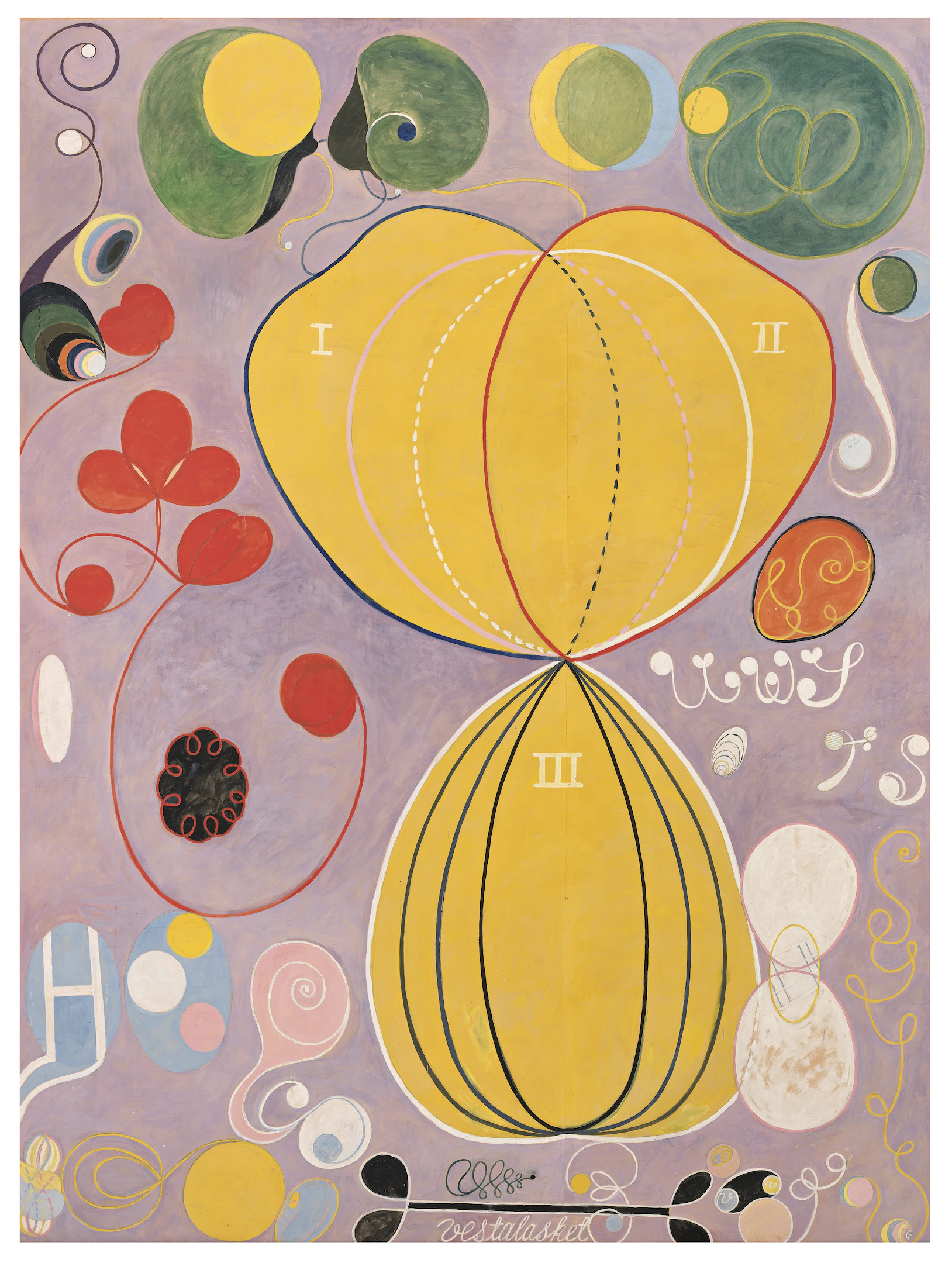
**Artwork by the brilliant Hilma af Klint, no 7, adulthood, 1907 and Tree of Life

Plopping down in his chair, he bluntly stated, “I feel like life is tasteless. There’s no seasoning or spice. I can’t muster enthusiasm; I don’t think I’ve ever been enthusiastic.
Honestly, I hear this symptom of lacking enthusiasm often. Quite a few of my clients come to see me for this exact reason, or a parallel, experiencing a lack of purpose.
So I prepared for his session, learning that his parents had divorced just before he hit double digits. I gathered other meaningful conscious experiences, such as he was once married, but that relationship came and went. And that he had worked incredibly hard and has had great success in his career but was never truly invested.
Our session was brilliant.
As I regressed him, he began to have the most phenomenal images of himself as a young teenager in his scenes. He recounted his experiences, mainly after his parent’s divorce, when he spent much time alone, even at 9, 10, and 13 years old.
He had earned the ” you’re so mature for your age” and “you are such a responsible young man” awards from both parents, which gave them each a hall pass from being around during this wildly important time of growth. During his regression, he watched himself from his adult perspective, understanding that there wasn’t emotional modeling for him, nor was there much in the way of investing in his physiological development. And although he experienced massive freedom in his solitude, he felt a fog of lethargy move over him during these developmental years. The emptiness of his home reflected within himself, a void of his unmet needs.
We looked deeply into these scenes.
It was as if a lightning bolt hit and lit up his internal landscape so he could see with absolute clarity; his face softened as he announced, “I was emotionally and psychologically abandoned.”
To this, I replied, “Tell me more.”
He said, “I used my vivid imagination to create fantastical future experiences as a mode of survival and protection and a way of trying to create emotional attachments to imaginary people and events. I had become and done just about everything, and when I landed back in the present moment, life felt dull, empty, and irritating. It was as if this distorted thinking and fantasizing exhausted all my dopamine, leaving me feeling numb and unenthusiastic. I’ve been participating in these same survival patterns my whole life and didn’t even realize it.”
The understanding alone was seismic for him, yet our continued work has dramatically shifted his life in ways he never thought were possible by allowing himself to be released from the version he created to survive. At the same time, he is learning to give himself permission to live in the present moment while using his imagination as a co-creative tool for his future.
We are learning so much about the brain and biology and how to create future experiences through our thoughts and our ability to create emotions.
But I want you to remember where and why he created these fantasies. Survival and protection and the unmet emotional needs. He was not in a place of peace, safety, or potential; indeed, he oversaturated himself with dopamine, which is why there’s fatigue to the false fantastical future.
Can you relate?
Have you noticed yourself creating a fantastical future out of survival? If so, what is this fantastical future protecting you from in the present?
It’s time to make the unconscious conscious so that you can live life on your present terms starting today.
xxab